World Obesity Day 2026

FISPGHAN Statement for World Obesity Day (March 4, 2026)
Childhood Obesity: A Global Health Crisis
Childhood obesity remains one of the most pressing public health challenges worldwide. On World Obesity Day 2026, the Federation of International Societies for Pediatric Gastroenterology, Hepatology and Nutrition (FISPGHAN) reaffirms its commitment to addressing childhood obesity as a critical global health priority affecting millions of children. This growing epidemic threatens not only current child health but also the future burden of noncommunicable diseases across the lifespan.
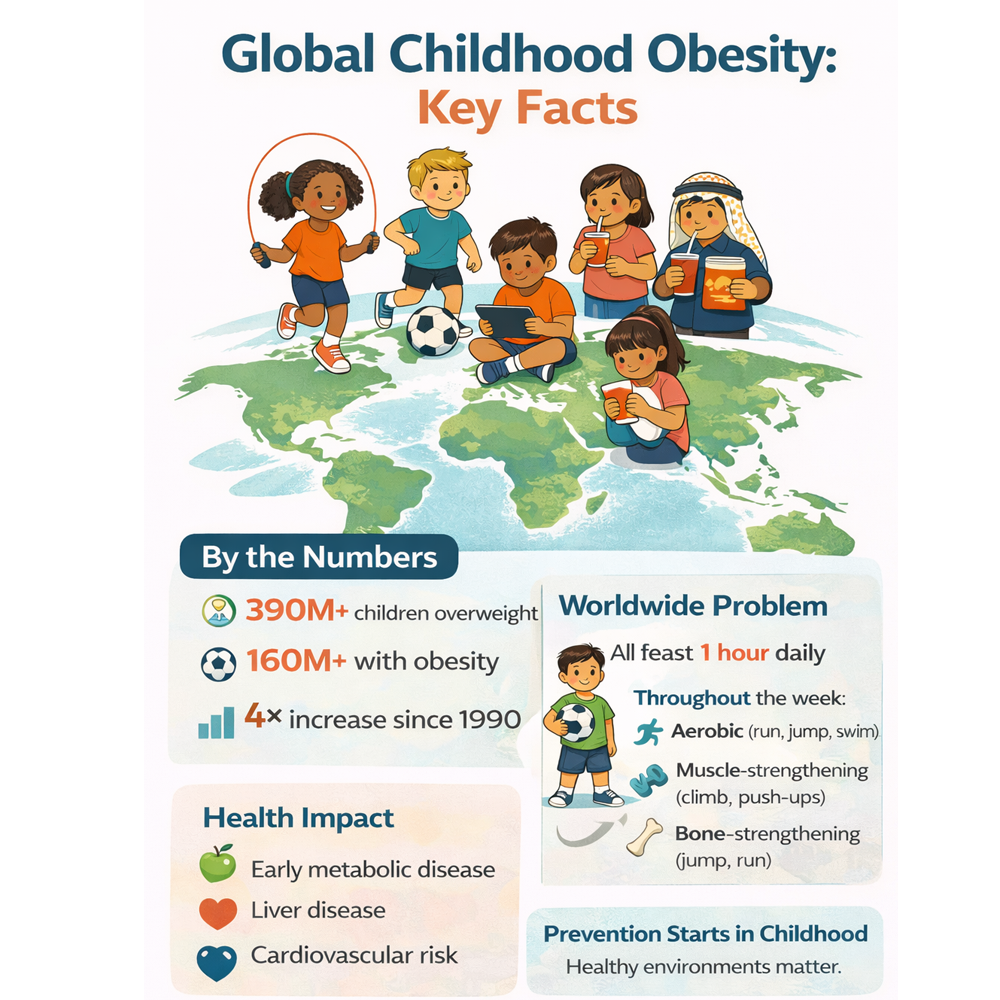
For the first time in history, the number of children and adolescents living with obesity has surpassed that of those who are underweight. Globally, 1 in 10 school-aged children and adolescents (5–19 years), or nearly 188 million individuals, live with obesity, and approximately 35 million children under five years of age are affected by overweight or obesity, according to WHO growth standards.
Childhood obesity significantly increases the risk of metabolic disorders, including type 2 diabetes, metabolic-associated steatotic liver disease (MASLD) and dyslipidemia, cardiovascular disease, musculoskeletal complications, and premature mortality in adulthood.
#WorldObesityDay #PreventChildObesity #HealthyFuture

Preventing Childhood Obesity
Effective prevention requires a comprehensive, multicomponent, and life-course approach grounded in collaboration. Early-life nutrition, families, schools, communities, and supportive public policies must work together to achieve sustainable and equitable outcomes. Evidence shows that unhealthy food environments—dominated by ultra-processed, energy-dense foods high in sugar, salt, and unhealthy fats—strongly influence children’s diets beyond individual or parental control. Prevention efforts must therefore extend beyond individual behavior change to include coordinated, system-level actions that promote healthier food environments.
Shared Responsibility Across Society
Individuals and Families
- Promote breastfeeding, balanced diets, and supportive feeding behaviors
- Avoid sugar-sweetened beverages and ultra-processed foods
- Encourage regular physical activity and healthy screen-time habits
Schools and Communities
Provide healthy school meals and access to clean drinking water
Deliver nutrition education
Create safe, activity-friendly environments
Enforce restrictions on unhealthy food marketing
Policy and Societal Level
Regulate food advertising targeting children
Improve food labeling standards
Implement policies that support healthy food environments
A Global Call to Action
FISPGHAN calls on governments, healthcare professionals, parents, schools, and industry leaders to take urgent and coordinated action by:
- Strengthening childhood obesity prevention programs through early-life nutrition and family education, including limiting screen time at home.
- Implementing school-based initiatives that promote healthy eating and regular physical activity.
- Regulating the marketing of unhealthy foods to children and improving food labeling policies.
- Advocating for policies that foster healthier food environments and reduce socioeconomic barriers to healthy living.
FISPGHAN’s Commitment
FISPGHAN is dedicated to global collaboration, strengthening research, and empowering healthcare professionals to tackle childhood obesity. Together, through education, advocacy, and evidence-based policy reform, we can change the trajectory of this epidemic and secure a healthier future for children worldwide.
Let us act today for a healthier tomorrow.
#WorldObesityDay #PreventChildObesity #HealthyFuture
Selected References
- Koletzko B, et al. Prevention of Childhood Obesity: A Position Paper of the Global Federation of International Societies of Pediatric Gastroenterology, Hepatology, and Nutrition (FISPGHAN). J Pediatr Gastroenterol Nutr 2020;70:702–10.
- World Health Organization (WHO). Obesity and overweight. 2025.
- UNICEF. Obesity exceeds underweight for the first time among school-age children and adolescents. 2025.