World Hepatitis Day 2026—Let's break it down

FISPGHAN campaign World Hepatitis Day(July 28, 2026)

FISPGHAN Statement on World Hepatitis Day
On the occasion of World Hepatitis Day, the Federation of International Societies for Pediatric Gastroenterology, Hepatology and Nutrition (FISPGHAN) joins the global community in reaffirming our commitment to eliminate viral hepatitis as a public health threat and to ensure that every child has the opportunity to grow up free from viral hepatitis and its long-term consequences.
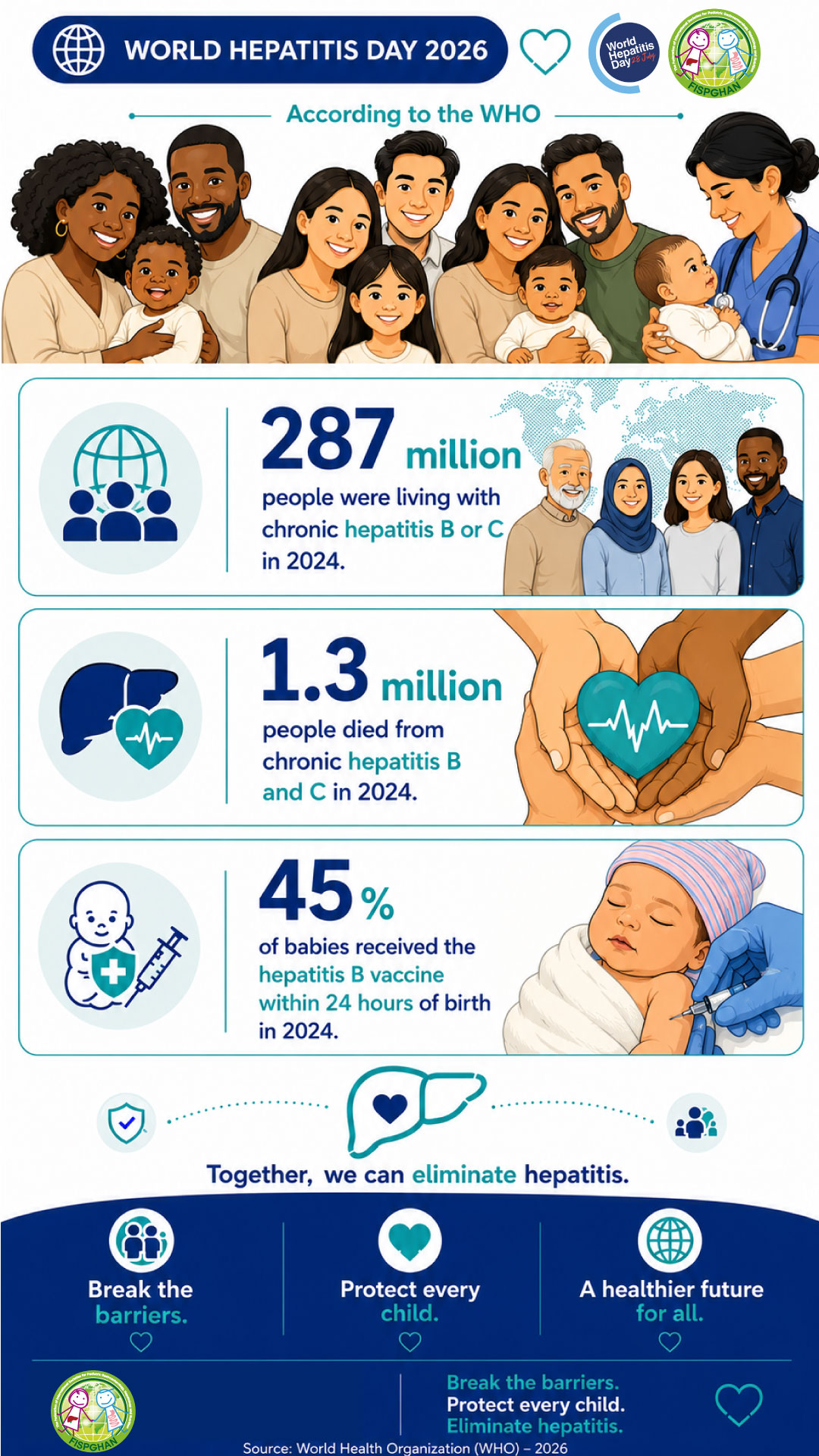
Despite substantial progress over recent decades, viral hepatitis continues to be a major cause of preventable illness and death worldwide. It affects millions of children and adolescents around the world. Many remain undiagnosed, untreated, or lack access to preventive and health care services. Consequently, they face a high lifetime risk of chronic liver disease, cirrhosis, and liver cancer. Elimination of viral hepatitis by 2030 cannot be achieved without a resolute, unwavering focus on the pediatric population.
Hepatitis B: Breaking the Cycle of Mother-to-Child Transmission
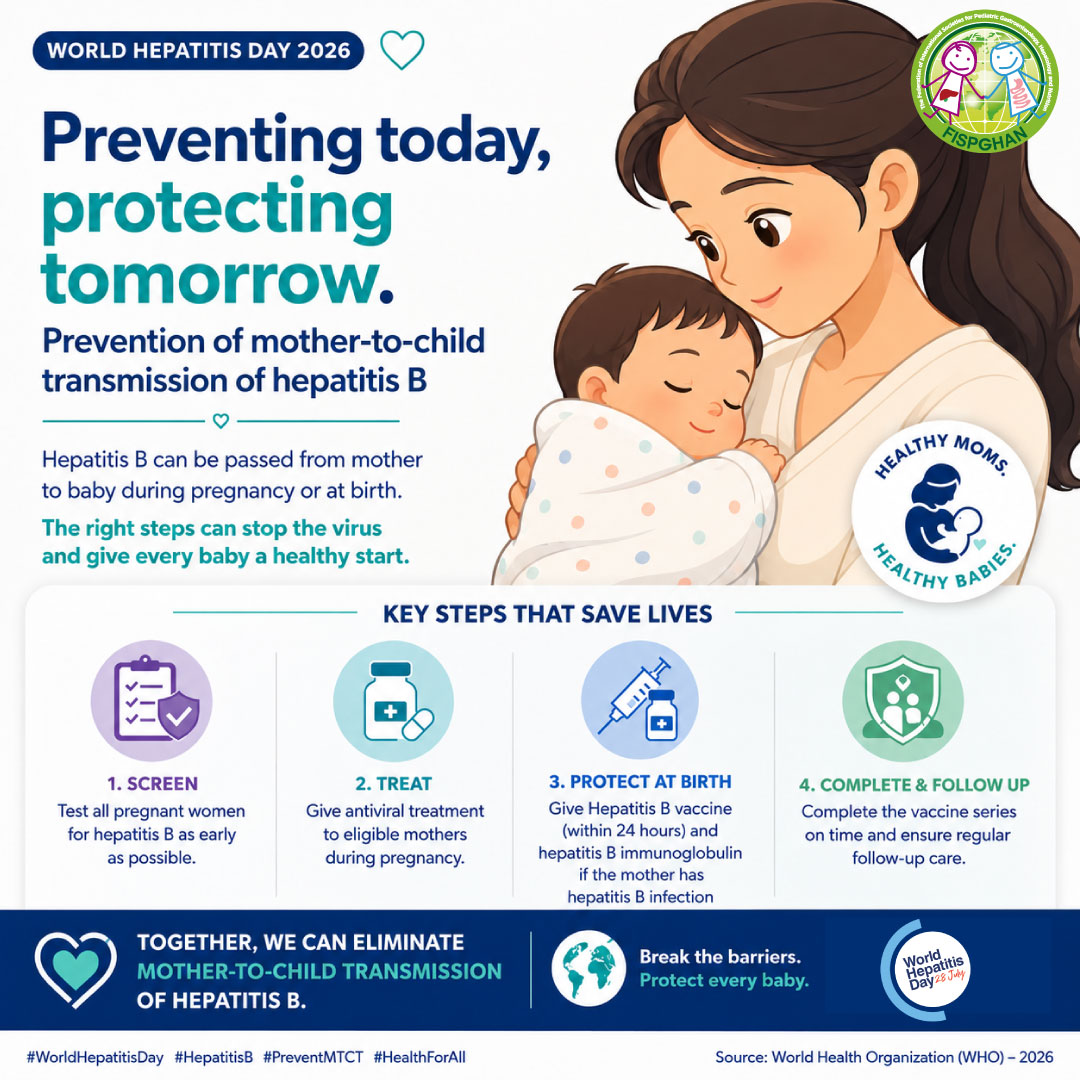
Infants infected with hepatitis B virus during birth or early childhood face a 90% risk of developing chronic infection, predisposing them to cirrhosis and liver cancer later in life. FISPGHAN strongly supports comprehensive, evidence-based strategies to eliminate mother-to-child transmission and early childhood infection, in accordance with WHO recommendations and national policies.
These strategies include:
· Universal maternal hepatitis B screening during pregnancy
- Appropriate antiviral therapy for pregnant women when indicated.
- Timely hepatitis B birth-dose vaccination within 24 hours for all newborns to ensure immediate protection even where maternal screening is delayed, undocumented, or missed.
· Completion of the full hepatitis B vaccination series for all infants to provide long-term protection.
Hepatitis C: A Curable Disease
The availability of highly effective direct-acting antiviral agents that can cure hepatitis C in children as young as 3 years of age has transformed the management of pediatric hepatitis C. All children and adolescents living with hepatitis C should have timely access to diagnosis, appropriate clinical care, and curative treatment in accordance with current recommendations.
Find Every Child
Many children with chronic hepatitis B or hepatitis C have no symptoms until liver disease has progressed. Earlier diagnosis enables appropriate monitoring, timely treatment when indicated, and prevention of further transmission. FISPGHAN encourages healthcare professionals to increase awareness, identify children at risk, and ensure timely access to appropriate evaluation and care.
Call to action
On this World Hepatitis Day, FISPGHAN calls upon governments, healthcare providers, professional societies, public health agencies, and international partners to work together to ensure equitable access to hepatitis prevention, diagnosis, and care for all children and that no child is left behind in the global effort to eliminate viral hepatitis.
We call for collective action to:
· Strengthen programs to prevent mother-to-child transmission of hepatitis B through universal antenatal screening, antiviral therapy for eligible pregnant women, and timely hepatitis B birth-dose vaccination within 24 hours.
· Strengthen national immunization programs to achieve and sustain high hepatitis B vaccination coverage by ensuring equitable access to timely birth-dose vaccination, completion of the infant vaccination series, and catch-up vaccination for unvaccinated children and adolescents.
· Expand hepatitis B and hepatitis C testing and early diagnosis for children and adolescents at risk of infection, including appropriate follow-up of infants born to infected mothers.
· Ensure equitable access to appropriate monitoring and treatment for children with chronic hepatitis B, and to curative therapy for hepatitis C.
· Promote safe healthcare practices to prevent the transmission of viral hepatitis.
· Raise awareness of viral hepatitis in children among healthcare professionals, families, educators, communities, and policymakers, and combat stigma.
· Strengthen research, education, and international collaboration to accelerate progress towards the WHO goal of eliminating viral hepatitis as a public health threat by 2030.
Featured Resources

Management of hepatitis C virus (HCV) infection in children (for health care professionals)
Who should be screened?
- Infants born to HCV-infected mothers. The risk of transmission from mother to baby is doubled if the mother is co-infected with HIV (from 5-6% to 10-11%).
- Children and adolescents with the suspicion of chronic viral hepatitis
- Adolescents with high risks, such as intravenous drug use, or in populations with a high prevalence of the infection.
- APregnant women should be screened for HCV infection at least once during each pregnancy.
Which tests should be used in patients with maternal HCV infection?
- Anti-HCV antibody in patients aged ≥ 18 months. If positive, follow this with HCV RNA to confirm active infection.
- Nucleic acid test for HCV RNA in infants aged 2 to 6 months.
Is breastfeeding safe for the baby of an HCV-infected mother?
- Breastfeeding is considered safe in HCV-positive mothers unless there are cracked or bleeding nipples or if the mother is co-infected with HIV.
Whom to treat
- All children and adolescents with chronic HCV infection aged ≥3 years
When to treat
- Regardless of any disease activity
How to treat
- Using approved direct-acting antivirals (DAAs)
| Regimen | Genotype | Duration (weeks) |
| Glecaprevir/pibrentasvir | 1-6 | 8 |
| Sofosbuvir/velpatasvir | 1-6 | 12 |
| Ledipasvir/sofosbuvir | 1,4,5,6 | 12 |
| Sofosbuvir/daclatasvir | 1-6 | 12 or 24* |
*Treatment for 12 weeks in patients without cirrhosis or 24 weeks in those who are treatment-experienced or diagnosed with compensated cirrhosis
How to monitor after the treatment
- HCV RNA (quantitative or qualitative NAT) to evaluate sustained virologic response at 12 weeks after the end of treatment
What is the efficacy and cost-effectiveness of DAAs?
- High efficacy; reported with SVR12 of >95%
- Cost-effective in children
What is the safety of DAAs?
- Rates of serious adverse events and treatment discontinuation of <1%
References
1. Panagiotakopoulos L, Sandul AL, Conners EE, et al. CDC recommendations for hepatitis C testing among perinatally exposed infants and children—United States, 2023. MMWR. Recommendations and Reports. 2023;72(4):1-21.
2. WHO. Guidelines on hepatitis B and C testing. Geneva: World Health Organization, 2017.
3. Bhattacharya D, Aronsohn A, Price J, Lo Re III V, AASLD–IDSA. Hepatitis C Guidance 2023 Update: American Association for the Study of Liver Diseases– Infectious Diseases Society of America Recommendations for Testing, Managing, and Treating Hepatitis C Virus Infection, Clin Infect Dis. 2023:ciad319.
4. WHO Updated recommendations on treatment of adolescents and children with chronic HCV infection, and HCV simplified service delivery and diagnostics. World Health Organization; Geneva: World Health Organization 2023.
5. Leung DH, Squires JE, Jhaveri R, et al. Hepatitis C in 2020: a North American Society for Pediatric Gastroenterology, Hepatology, and Nutrition position paper. J Pediatr Gastroenterol Hepatol Nutr. 2020;71(3):407-17.
6. Indolfi G, Gonzalez-Peralta RP, Jonas MM, et al. ESPGHAN recommendations on treatment of chronic hepatitis C virus infection in adolescents and children including those living in resource-limited settings. J Pediatr Gastroenterol Nutr. 2024;78(4):957-972.
7. Indolfi G, Easterbrook P, Giometto S, et al. Efficacy and safety of DAA in children and adolescents with chronic HCV infection: A systematic review and meta-analysis. Liver Int. 2024;44(3):663-81.
Protecting Children from Hepatitis C: What You Need to Know
Hepatitis C is a virus that affects the liver and can lead to serious health problems if left untreated. While it often causes no symptoms in children, early detection and treatment can prevent long-term damage.
How to Prevent Transmission
- Avoid contact with blood: Never share needles, razors, or toothbrushes that may have blood on them.
- Screen pregnant women: Mothers with hepatitis C can pass the virus to their babies. Testing during pregnancy is advised.
- Use sterile medical equipment: Ensure all injections, transfusions, and dental procedures are done safely.
- Educate teens: Raise awareness about the risks of injection drug use, unsafe tattoos, and piercings.
How to Check for Infection
- Children at risk—especially those born to infected mothers or who had certain medical procedures—should be tested.
- Step 1: A simple blood test for hepatitis C antibodies.
- Step 2: If positive, an HCV RNA test confirms if the infection is active.
How to Treat
- Hepatitis C is now curable with safe, effective oral medications called direct-acting antivirals (DAAs).
- In most cases, treatment lasts 8–12 weeks and has minimal side effects.
- Children as young as 3 years old can be treated under medical supervision.
- Early treatment prevents liver damage and ensures a healthy future.
Early detection saves lives. Testing and treatment are now simpler and more effective than ever.

Protecting Children from Hepatitis B: What You Need to Know
Hepatitis B is a virus that infects the liver. It can cause lifelong infection, liver scarring (cirrhosis), liver failure, and liver cancer. Most babies and young children with hepatitis B have no symptoms, making early prevention and testing especially important.
How to prevent hepatitis B
• Vaccinate every child. Hepatitis B vaccination is safe and highly effective.
• Give the birth dose on time. The first hepatitis B vaccine should be given as soon as possible after birth, ideally within 24 hours, followed by 2-3 doses to complete the series.
• Screen pregnant women. Testing pregnant women for hepatitis B helps identify babies who need extra protection at birth.
• Use safe medical practices. Ensure injections, blood transfusions, dental procedures, and medical equipment are safe and sterile.
• Avoid contact with blood. Do not share razors, toothbrushes, needles, or other items that may be contaminated with blood.
Who should be tested for hepatitis B?
• Pregnant women should be tested for hepatitis B during pregnancy.
• Babies born to mothers with hepatitis B should receive appropriate follow-up testing after completing the recommended preventive measures.
• Children at increased risk, including those living with an infected family member or who are not fully vaccinated, should discuss hepatitis B testing with their healthcare providers.
• A simple blood test can determine whether someone has a hepatitis B infection or is protected by vaccination.
How to manage hepatitis B
• There is no cure for chronic hepatitis B yet, but effective medical care can help prevent serious liver disease.
• Children with chronic hepatitis B should be regularly monitored by healthcare professionals.
• Some children may benefit from antiviral treatment, depending on their age and liver condition.
• Regular follow-up helps protect liver health and allows timely treatment if needed.
Hepatitis B is preventable. Vaccination protects children for life. Early testing and appropriate care protect liver health.
Protect your child’s future
Reference: World Health Organization. Hepatitis B. Available from: https://www.who.int/news-room/fact-sheets/detail/hepatitis-b
Who should be tested?
For healthcare professionals:
- All pregnant women should be tested for hepatitis B to allow timely prevention of mother-to-child transmission. Hepatitis C testing during pregnancy should follow national recommendations, epidemiology and individual risk assessment.
- Infants born to mothers with hepatitis B or C require appropriate prophylaxis, follow-up and testing according to their type of exposure.
- Children and adolescents with suspected liver disease should be evaluated, particularly when they have jaundice, unexplained abnormal liver tests, hepatomegaly, persistent fatigue or other signs of acute or chronic hepatitis.
- Testing for hepatitis B and C should be considered after exposure to potentially infected blood, unsafe injections or procedures, unscreened blood products, haemodialysis, shared injecting equipment, or tattoos and piercings performed with non-sterile equipment.
- Children and adolescents who are household or sexual contacts of someone with hepatitis B should be assessed and vaccinated when appropriate.
- People who test positive for hepatitis B should also be evaluated for hepatitis D, particularly when clinically indicated or according to local epidemiology.
- Testing for hepatitis A or E is generally diagnostic rather than routine and should be considered in patients with acute hepatitis, relevant travel or food and water exposure, or during suspected outbreaks.