
Hepatitis B Birth Dose — FISPGHAN Statement

FISPGHAN Statement Reaffirming the Importance of the Universal Hepatitis B Birth Dose Vaccination
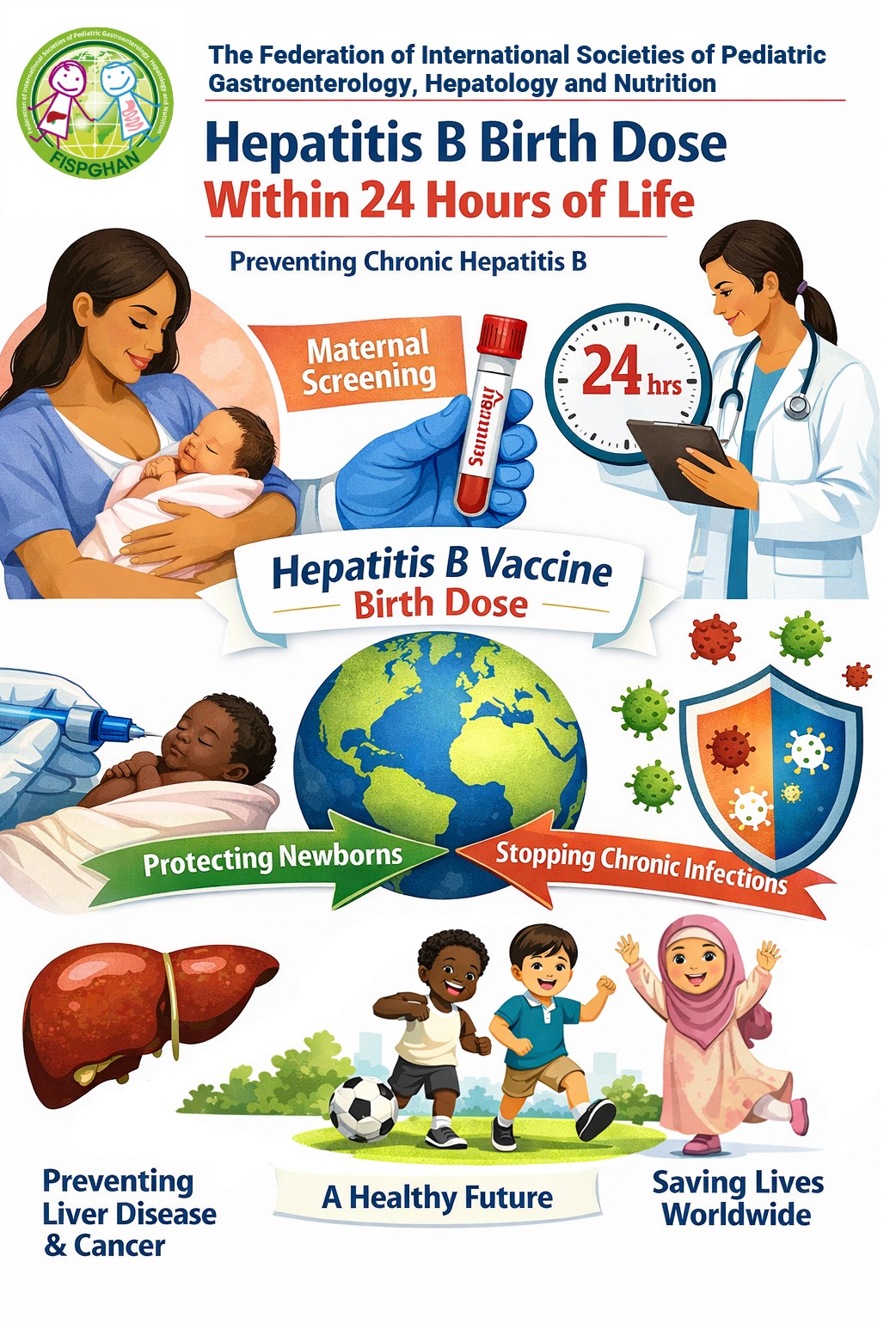
The Federation of International Societies for Pediatric Gastroenterology, Hepatology, and Nutrition (FISPGHAN) reaffirms the critical importance of administering the hepatitis B birth dose within 24 hours of life, alongside effective maternal screening. Perinatal and early childhood transmission accounts for the majority of chronic hepatitis B virus (HBV) infections worldwide. Timely hepatitis B vaccination at birth remains one of the most effective, evidence-based, and equitable interventions to prevent chronic HBV infection and its lifelong complications.
Why the Birth Dose Remains a Key Component of Global HBV Prevention
1. It protects against perinatal and early childhood transmission.
Infants infected early in life have a 90% risk of developing chronic HBV infection. The birth dose offers immediate protection and helps prevent severe liver disease, cirrhosis, and hepatocellular carcinoma in the long term.
2. It is a safeguard against missed or delayed maternal screening.
FISPGHAN fully supports universal maternal HBV screening during pregnancy as a cornerstone of prevention. However, screening gaps may still occur even in well-resourced health systems, including late, undocumented, or missed testing, as well as seroconversion during pregnancy. The birth dose ensures that no newborn is left vulnerable due to system gaps.
3. There is strong evidence of safety and effectiveness.
More than three decades of global data show that the birth dose is safe, well-tolerated, and highly effective. Countries implementing universal newborn vaccination have achieved reductions of more than 95% in HBV infection among children.
4. It is essential for global equity and HBV elimination goal.
In regions with inconsistent prenatal care or high HBV prevalence, the birth dose is the most practical, equitable, and impactful intervention. It fully aligns with WHO recommendations and is central to the WHO target of eliminating viral hepatitis as a public health threat by 2030, specifically by reducing new chronic HBV infections by 90%.
5. Delaying the birth dose risks undermining decades of public health progress.
There is no evidence that delaying vaccination until 2 months of age provides equivalent protection. Weakening or removing the birth dose policy risks increasing the number of unprotected infants and reversing substantial gains achieved in hepatitis B prevention.
FISPGHAN’s Position
FISPGHAN strongly encourages all countries to adopt evidence-based strategies that effectively prevent perinatal and early childhood HBV transmission, including
• Universal maternal HBV screening during pregnancy and appropriate management of HBV-positive mothers.
• Timely hepatitis B birth dose vaccination for all newborns as part of a three-dose schedule, particularly in settings where maternal screening may be incomplete or delayed.
• Completion of the full hepatitis B vaccination series for all infants to ensure long-term protection.
• Policies that sustain high vaccination coverage and protect infants from preventable HBV infection.
Our Commitment
FISPGHAN will continue to work with clinicians, policymakers, professional societies, and global partners to ensure that every infant—regardless of where they are born—receives timely protection against this preventable, lifelong infection.
The hepatitis B birth dose remains a cornerstone of global child health and a vital tool in the worldwide effort to eliminate viral hepatitis.