
Button Battery Awareness Day 2026

International Button Battery Awareness Day (June 12, 2026)
On International Button Battery Awareness Day, FISPGHAN affirms its global commitment to preventing pediatric injuries caused by button battery ingestion.
Button batteries may be small, but the damage they can cause in children who swallow them can be devastating. Ingestion can lead to serious—and sometimes fatal—injuries in just a matter of hours. On June 12, we join with a global network of pediatric gastroenterologists, surgeons, otolaryngologists, emergency physicians, pediatricians and other child health advocates to promote awareness, education, and rapid response across all regions of the world.
Prevention of battery ingestion
🔋 Preventing button battery ingestion requires more than individual caution—it demands awareness, safer products, responsible disposal, and rapid action when ingestion is suspected.
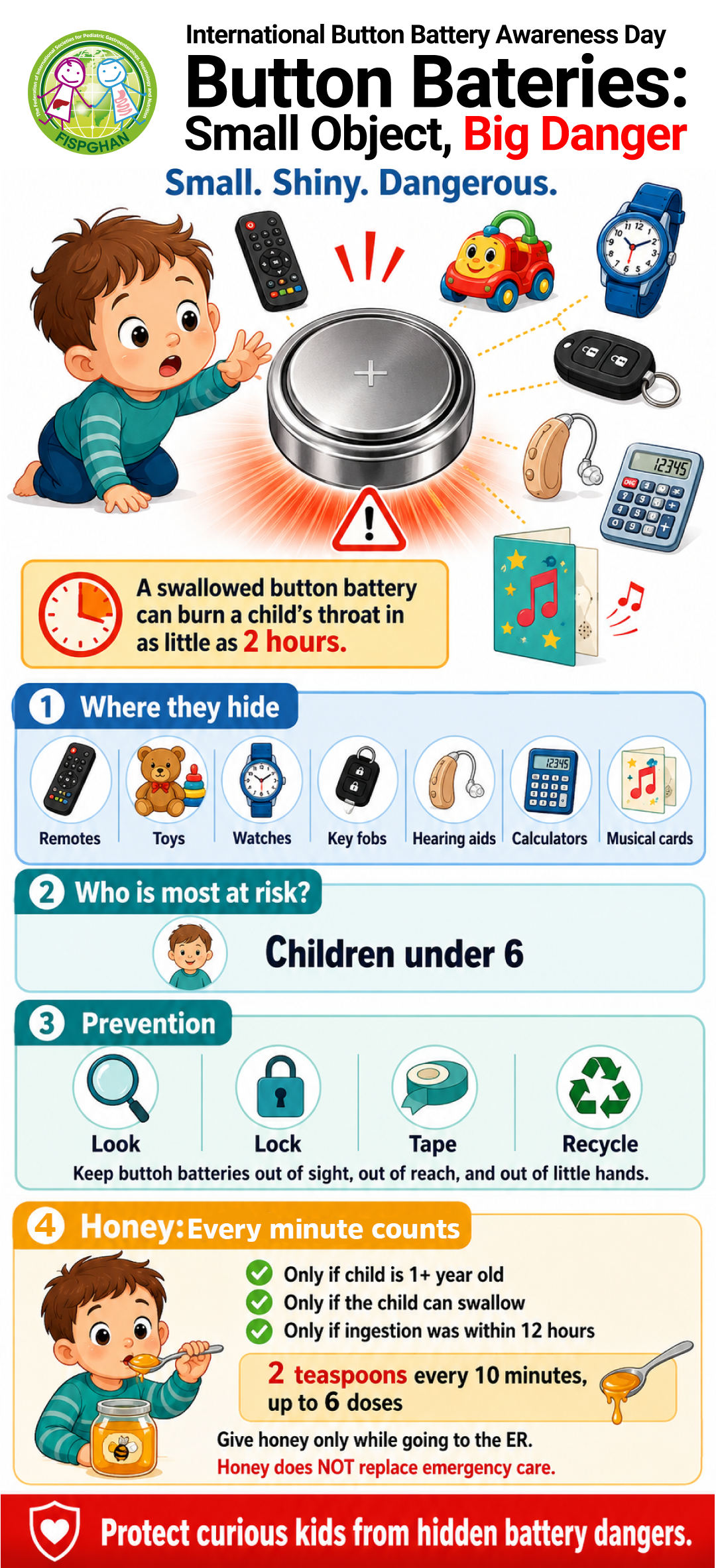
🔋 Button battery ingestion is a major pediatric emergency because a battery lodged in the esophagus can cause severe injury within a very short time. Prevention begins with public awareness: parents, grandparents, babysitters, teachers, and all caregivers must understand that button batteries are not harmless household objects. They are found in everyday devices such as remote controls, toys, watches, key fobs, hearing aids, thermometers, and electronic candles.
A key preventive message is simple:
🔋 Button batteries must be kept locked away, high, and out of reach. Devices should have secure, child-resistant battery compartments, and loose batteries should never be left in drawers, bags, tables, or bedside areas. Used batteries are also dangerous; even “dead” or spent batteries may remain harmful for years if swallowed. Safe disposal is therefore an essential part of prevention.
Child-resistant packaging, safer battery compartments, improved disposal systems, and new battery technologies can all help reduce risk. At the same time, clinical guidelines and educational campaigns from organizations such as FISPGHAN and ESPGHAN are essential to ensure that families and healthcare professionals know how to respond quickly, because when a child swallows a button battery, every minute counts.
A Global Strategy for Prevention and Action
FISPGHAN’s strategy to creating awareness around the dangers of button battery ingestion is rooted in collaboration and global reach. Working through its member societies, FISPGHAN is launching a multilingual, multi-platform campaign to foster education around button battery hazards, encourage prevention in homes and communities, and promote clinical readiness for rapid treatment.
Our campaign goals are to:
- Promote public awareness of the dangers of button battery ingestion.
- Empower pediatric providers with the latest guidelines for emergency response and safe removal.
- Collaborate with member societies to disseminate content across social media, clinics, and national associations.
- Share evidence-based resources and country-specific messaging to improve local impact.
- Encourage cross-sector partnerships with advocacy organizations, poison centers, and government agencies to advance policy and safety regulations.
Together, we believe we can save lives through unified action and education.
FISPGHAN’s Commitment
FISPGHAN is committed to protecting children everywhere from preventable gastrointestinal injury and death from button battery ingestions. On June 12, 2026, we stand with our member societies around the world in calling for:
- Increased vigilance in homes and clinics
- Better product safety standards and battery compartment design
- Rapid action when ingestion is suspected
- Global education efforts to prevent future harm
Together, we can make button battery awareness not just a day—but a lasting movement in pediatric safety.
Let’s protect children. Let’s act now.
Featured Resources
Professor Christos Tzivinikos, "Button Battery Ingestion: Every Minute Counts"
Professor Christos Tzivinikos from Al Jalila Children’s Specialty Hospital, Mohammed Bin Rashid University, and Dubai Medical College, in a timely discussion on button battery ingestion. Professor Tzivinikos reviews the growing global burden of these injuries, the life-threatening complications they can cause, the importance of urgent recognition and management, and the key prevention strategies needed to improve awareness and safety.
📣 What You Can Do
For Parents & Caregivers:
Keep all button batteries out of children’s reach.
Use child-safe packaging and secure battery compartments in devices.
Dispose of used batteries immediately and safely.
If you suspect a child has swallowed a button battery:
Seek emergency help right away.
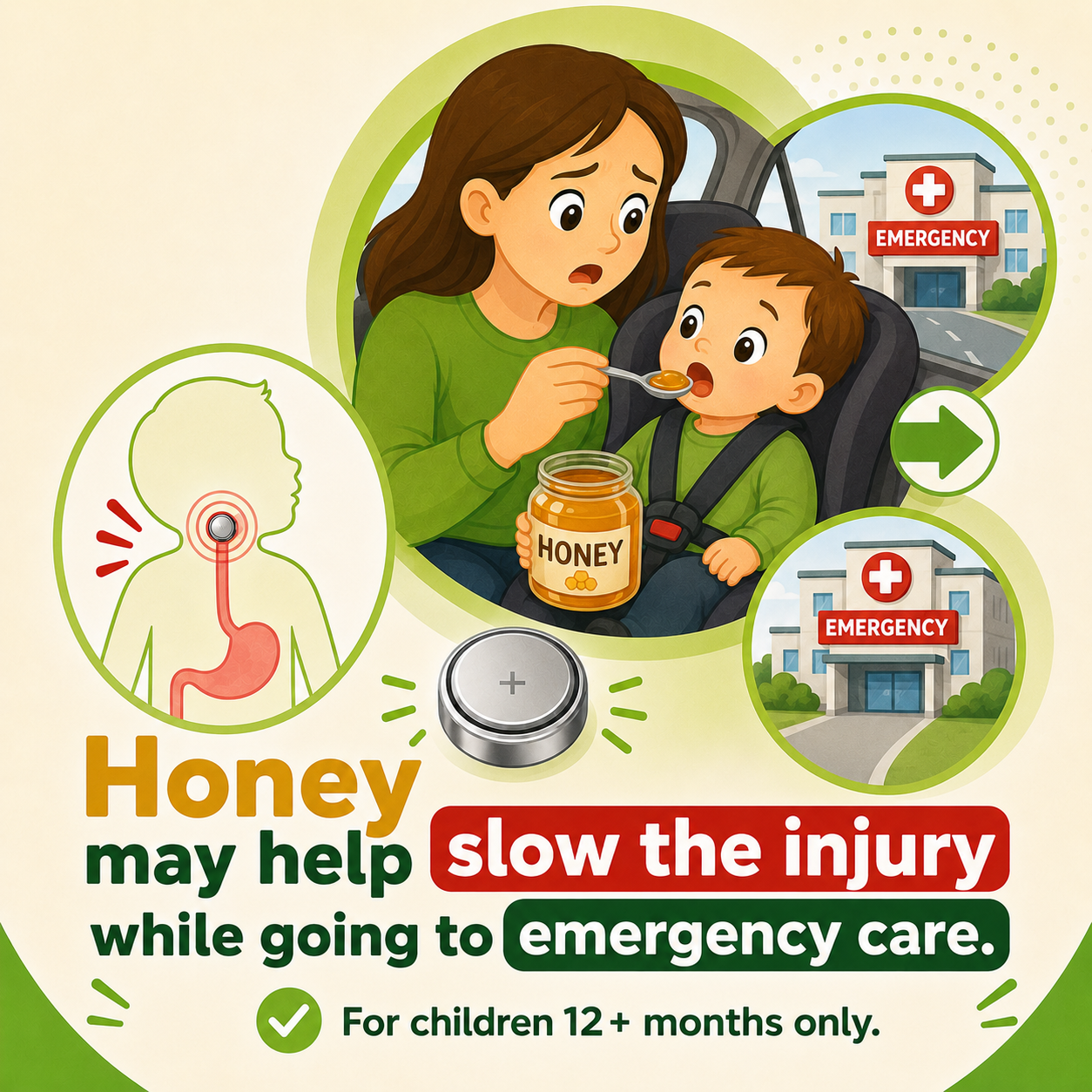
If the child is over 1 year old and ingestion occurred within 12 hours, give 2 teaspoons (10ml) of honey every 10 minutes en route to the ER.
For Pediatric Providers:
Educate families during well-child visits.
Advocate for child-safe designs and battery packaging.
Share clinical guidance on radiographic identification and urgent removal protocols.

Other Button Battery Awareness Campaigns
